

Highlight

Self-Developed Customized Process Flow

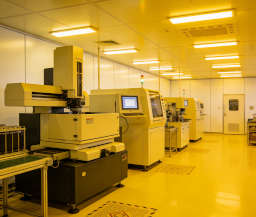
DWMicrowave currently operates under a Fablite model, equipped with a cleanroom, 50GHz four-port high-performance vector network analyzer and testing equipments, as well as four sets of specialized semiconductor process tools.
Standard manufacturing processes for chip-based products are completed at well-known foundries, ensuring reliable mass‑production performance. Specialized manufacturing steps and microwave performance testing are carried out in the DWMicrowave’s own cleanroom. These proprietary manufacturing processes are entirely self‑developed.


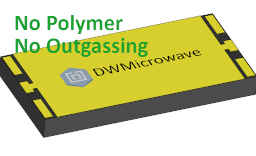
Filter - Manufactured on semiconductor process without polymer

Some competing chips contain organic polymers inside, which continuously release trapped gas molecules in airtight environments, particularly in vacuum conditions. The outgassing mechanisms are twofold:

1) Physical adsorption and outgassing: The polymer surface physically adsorbs gases such as water vapor and oxygen from the air. In a vacuum environment, these gas molecules, bond by weak van der Waals forces, rapidly desorb and are released.

2) Volatilization and decomposition: The numerous additives and residual monomers in the polymer have relatively low molecular weights and high vapor pressures. Under vacuum and thermal stress conditions, they either volatilize directly or decompose into smaller gas molecules, which then escape.

In different applications, the released gas molecules may have multiple adverse effects on system performance:

  • For airtight enclosures, such as the sealed cavities formed in T/R modules through parallel seam welding or laser welding, the gas molecules released by organic polymers cannot escape these enclosed spaces. Many of these gas molecules can damage the chips inside the cavity. For example, for a GaAs MMIC chip, exposure to only 0.5% hydrogen atmosphere can lead to significant device performance degradation after 500 hours.[1][2]
  • For low-pressure or vacuum environments, such as satellite-borne equipment, the gas contained within organic polymers expands due to the reduced external pressure, generating substantial stress. In severe cases, this stress is likely to damage the chips. For instance, MIL-STD-883, Method 1001 specifies low-pressure test conditions to verify the ability to withstand pressure differentials. [3]
  • For vacuum-packaged devices, gases released by organic polymers directly reduce the vacuum level, thereby affecting device performance.

[1] P. C. Chao, M. Y. Kao, K. Nordheden, and A. W. Swanson, “HEMT Degradation in Hydrogen Gas,” IEEE Electron Device Letters, Vol. 15, pp. 151–153, May 1994.
[2] P. Schuessler and D. Feliciano-Welpe, “The Effects of Hydrogen on Device Reliability,” Hybrid Circuit Technology, pp. 19–26, January 1991.
[3] Test Method Standard Microcircuits, MIL-STD-883H, Method 1001, 2010

Filter - Excellent PIM performance guaranteed by non-magnetic metals

Passive Intermodulation (PIM) is an often overlooked but critical filter performance metric. It represents the intermodulation products generated when two or more high-power carrier signals transit through a passive device with nonlinear properties.

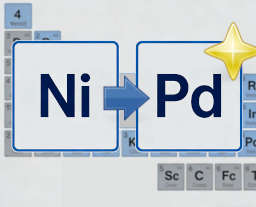
A significant source of PIM is magnetic materials, especially magnetic metals like nickel. Magnetic materials affect passive intermodulation through three primary mechanisms:[4][5]

1) Nonlinear Hysteresis Effect: When an RF signal is applied to a magnetic material, the changing magnetic field strength causes a nonlinear change in magnetic flux density due to the nonlinear nature of the material’s magnetization curve (B-H curve).
2) Magnetic Saturation: Under high RF signal power, the magnetic material may enter the saturation region. In this region, the permeability (μ) drops sharply, and the nonlinearity of the B-H curve becomes extreme, generating very high distortion.
3) Magnetostriction Effect: Magnetic metal (e.g. nickel) undergo minute mechanical deformation under the influence of a magnetic field. This mechanical vibration couples with the electromagnetic field, introducing additional nonlinearity.

[4] G. C. Bailey and A. C. Ehrlich, “A study of rf nonlinearities in nickel”, Journal of Applied Physics 50, 453, 1979
[5] P. Ansuinelli, A. G. Schuchinsky, F. Frezza; and M. B. Steer, “Passive intermodulation due to conductor surface roughness, IEEE Transactions on Microwave Theory and Techniques, Vol. 66, Feb 2018.